
The Sustainability Gap: Why Energy-Efficient Homes Are Commanding Stronger Rents

Updated: Jul 25

TL;DR
Energy-efficient, warm, dry homes increasingly command stronger rents and lower vacancy than cold, inefficient stock. Tenants feel the difference in their power bills and their comfort, and they'll pay for it and stay longer. With Healthy Homes setting a floor and tenant expectations rising above it, the gap between efficient and inefficient stock is widening. This post explains the trend and what it means for where you invest and how you upgrade.
Tenants used to choose on location and price. Increasingly they're choosing on running costs and comfort too.
A warm, dry, efficient home costs less to live in and feels better to live in. Tenants notice both, and in a market where they have choice, they're voting with their applications and their tenancy length.
What's Driving It
A few forces are converging:
Healthy Homes set a floor. Minimum standards for heating, insulation and ventilation mean the worst stock has been lifted, and tenants now expect at least that baseline.
Power costs. Energy is a real line in a tenant's budget. A home that's cheap to heat is effectively cheaper to live in, even at the same rent.
Comfort and health. Warm, dry homes are more pleasant and healthier. Tenants increasingly prioritise this, particularly families.
Awareness. Tenants are more informed about what makes a home efficient and more willing to factor it into their choice.

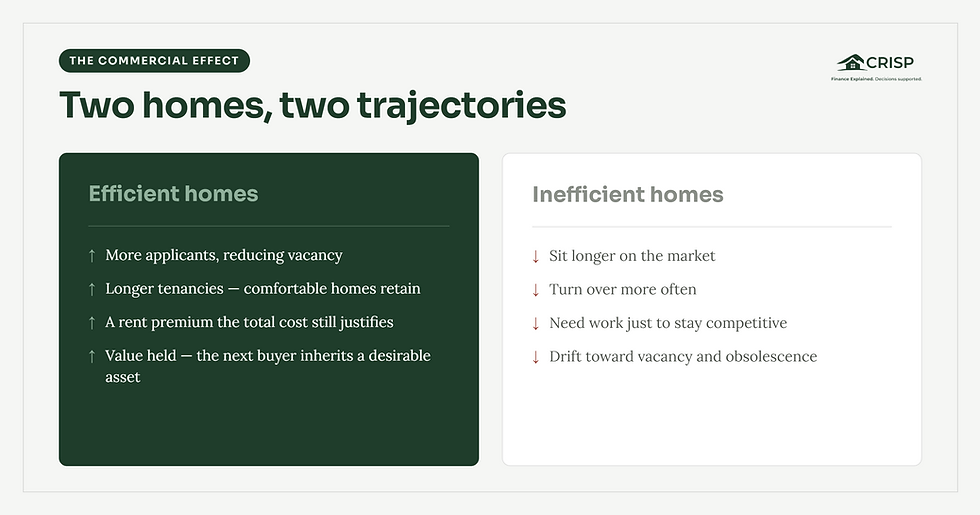
The Commercial Effect
Efficient homes:
Attract more applicants, reducing vacancy
Retain tenants longer, because a comfortable home is one people stay in
Can command a rent premium, because the total cost of living there is competitive
Hold value better, because the next buyer inherits a compliant, efficient, desirable asset
Inefficient homes do the opposite. They sit longer, turn over more, and increasingly need work just to stay competitive.
What This Means for Buying
When assessing a property, efficiency is now part of the investment case, not an afterthought:
How well insulated is it, beyond the minimum?
How is it heated, and what does that cost a tenant?
Is it genuinely warm and dry, or compliant on paper but cold in practice?
What would it cost to lift it from compliant to genuinely efficient?
A cold, compliant home is a future problem. An efficient one is a competitive asset.
The Upgrade Calculation
For stock you already own, the question is whether efficiency upgrades pay. Often they do, through lower vacancy, higher retention, and modest rent gains, on top of protecting the asset's future desirability.
Insulation beyond minimum, an efficient heat pump, draught-proofing, better ventilation. These aren't just compliance costs. They're investments in the property's competitiveness.
Where This Leaves You
The gap between efficient and inefficient rental stock is widening and it's not going to reverse. Tenant expectations only move one way.
Buy efficient where you can, and upgrade what you own where the maths works. The cold, inefficient end of the market is where vacancy and obsolescence are heading.
Upgrade spending and lending capacity connect. Improvements that lift rent and reduce vacancy strengthen your serviceability position, which can fund the next move.
At CRISP, we help investors think about upgrades as part of the portfolio strategy, not just maintenance. Efficient assets borrow and perform better.

Other relevant articles to check out:
About the Author:
Joshua Flack is a mortgage and lending adviser and the founder of Crisp Financial. Before finance, he spent two decades running businesses across construction, facilities services, and franchising, which is why his advice starts with how the numbers actually work rather than how the brochure says they should. He works with home buyers, investors, and self-employed borrowers across New Zealand, with particular depth in complex and non-standard lending. Crisp Financial Limited (FSP1012114) operates under the Link Financial Group FAP licence. The information in this article is general in nature and is not regulated financial advice.



Comments